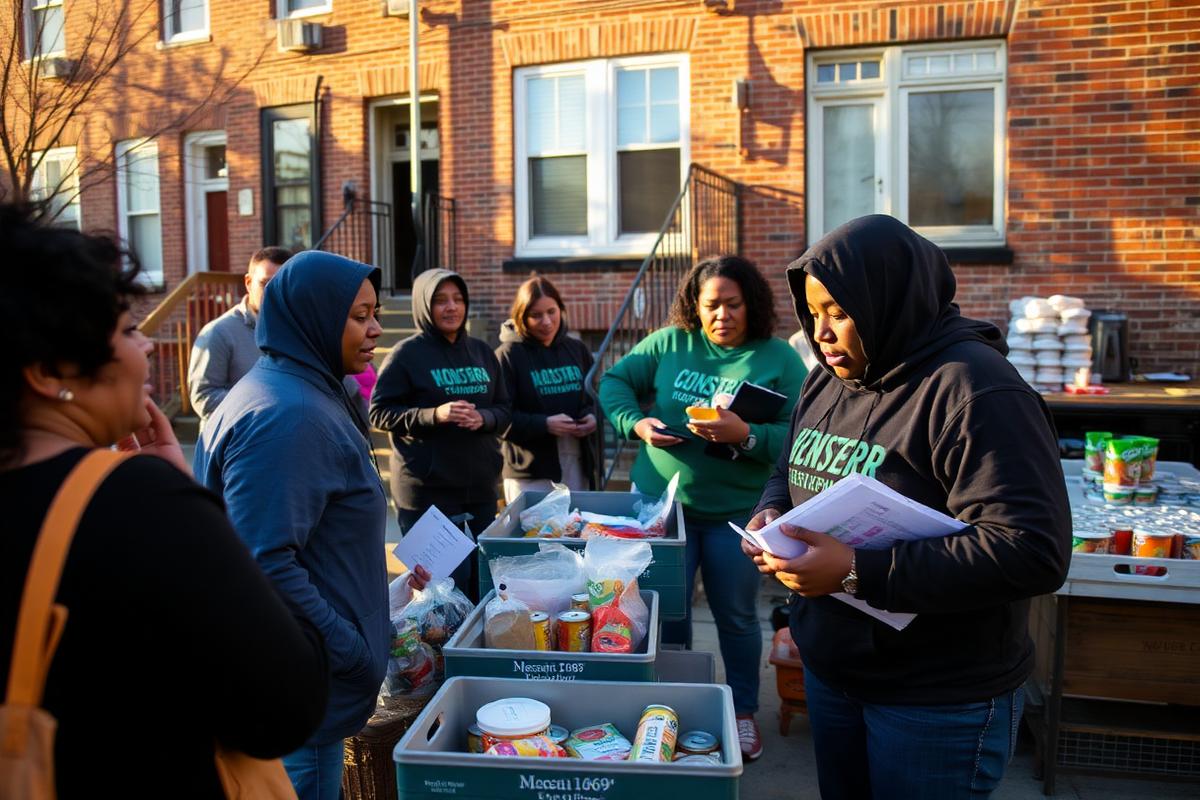
A nonprofit corporation is a legal entity organized to serve a public or charitable purpose rather than to generate profit for owners. It can earn revenue, hire staff, hold property, and sign contracts — but its surplus must be reinvested in the mission.
Becoming a nonprofit is a two-part process. First you incorporate with the Maryland Department of Assessments and Taxation. Then you apply separately to the IRS for federal tax-exempt status. Incorporating alone does not make donations deductible; the IRS determination letter does.
Is a nonprofit right for your idea?
A nonprofit fits when the work serves a community need — education, health, arts, housing, workforce development, neighborhood revitalization — and will be funded largely by donations, grants, and program fees rather than investor capital.
If you want to own equity, take profits home, or raise investment, an LLC or corporation is the better structure. Some founders start a for-profit business with a social mission instead, or run their project under an existing nonprofit's fiscal sponsorship while they test demand.
Advantages
Federal and state tax exemption
Approved 501(c)(3) organizations do not pay federal corporate income tax on mission-related revenue, and Maryland can exempt them from state income and sales tax.
Tax-deductible donations
Donors can deduct gifts to a 501(c)(3), which makes fundraising campaigns, major gifts, and corporate sponsorships far easier to secure.
Access to grants
Most foundation, corporate, city, and federal grant programs require documented tax-exempt status before they will consider an application.
Limited liability protection
Like a corporation or LLC, a nonprofit corporation separates the personal assets of directors, officers, and staff from the organization's debts.
Trade-offs
No private ownership
Nobody owns a nonprofit. Assets are permanently dedicated to the mission, and if the organization dissolves they must transfer to another exempt organization.
More paperwork and oversight
You file annually with SDAT, the IRS (Form 990 series), and the Maryland Secretary of State for charitable solicitation registration.
Board governance is required
A board of directors controls the organization. Founders answer to that board rather than making decisions unilaterally.
Limits on activity and compensation
Political campaign activity is prohibited, lobbying is limited, and salaries must be reasonable — no profits may benefit insiders.
How to start a nonprofit in Maryland
- 1
Define the mission and confirm the need
Write a clear mission statement and check whether an existing Baltimore organization already serves that need. Partnering or launching a fiscally sponsored project is often faster and cheaper than a new entity.
- 2
Recruit an initial board of directors
Maryland nonprofit corporations need at least one director, but funders expect a working board of three or more unrelated members with financial, legal, and community expertise.
- 3
Choose and clear your name
Search the SDAT business name database and the USPTO trademark database, then confirm the matching domain and social handles are available.
- 4
Incorporate with Maryland SDAT
File Articles of Incorporation for a Tax-Exempt Nonprofit through Maryland Business Express. The Articles must include IRS-required purpose and dissolution clauses, or your 501(c)(3) application will be rejected.
- 5
Appoint a resident agent
Every Maryland entity needs a resident agent with a Maryland street address to receive legal notices. A director can serve, or you can hire a commercial service.
- 6
Adopt bylaws and a conflict-of-interest policy
At the first board meeting, approve bylaws, adopt a conflict-of-interest policy, elect officers, and record minutes. The IRS asks for these documents.
- 7
Get your federal EIN
Apply free and instantly on the IRS website. You need the EIN to open a bank account and to file for tax-exempt status.
- 8
Apply to the IRS for 501(c)(3) status
File Form 1023 or, if you expect under $50,000 in annual gross receipts, the streamlined Form 1023-EZ. Approval arrives as a determination letter that grant makers will ask to see.
- 9
Register for Maryland tax exemptions and charitable solicitation
Use the Combined Registration Application for state tax accounts, request a sales and use tax exemption certificate from the Comptroller, and register to solicit donations with the Maryland Secretary of State.
- 10
Open a bank account and set up bookkeeping
Keep organizational funds fully separate from personal accounts, track restricted versus unrestricted gifts, and adopt basic financial controls from day one.
- 11
Stay in good standing
File the SDAT Annual Report by April 15, the IRS Form 990 series each year, and renew your charitable registration. Missing filings can revoke exempt status.
Registrations, licenses, and permits
- Charitable solicitation registration — Required by the Maryland Secretary of State before you ask the public for donations, with annual renewals and financial reporting.
- Sales and use tax exemption certificate — Issued by the Comptroller of Maryland so the organization can buy mission-related goods without paying sales tax.
- Baltimore City permits for programs and events — Fundraisers, festivals, food service, and use of public space each require their own city permits and inspections.
- Zoning, use, and occupancy approval — Before signing a lease for offices, a pantry, or a community space, confirm with Baltimore City that the intended use is permitted at that address.
- Employer registrations — If you hire staff, register for Maryland withholding and unemployment insurance and carry workers' compensation coverage.
Where to get help
- IRS — Charities and Nonprofits
Official guidance on 501(c)(3) requirements, Form 1023, and annual Form 990 filings.
- IRS — Apply for an EIN
Free federal Employer Identification Number application, issued immediately online.
- Maryland Business Express
File Articles of Incorporation for a tax-exempt nonprofit and order a Certificate of Good Standing.
- Maryland SDAT — Charter Business Services
Filing forms, fees, name searches, annual reports, and entity status lookups.
- Maryland Secretary of State — Charity Registration
Register and renew your authority to solicit charitable donations in Maryland.
- Maryland Nonprofits
Statewide association offering training, standards for excellence accreditation, and consulting for new nonprofits.
- SCORE Baltimore
Mentors who can review your governance documents and startup plan at no cost.
Ready to make it official?
Return to the full registration guide to form your entity, get your EIN, and file for the licenses Baltimore City requires.
Back to Register and License