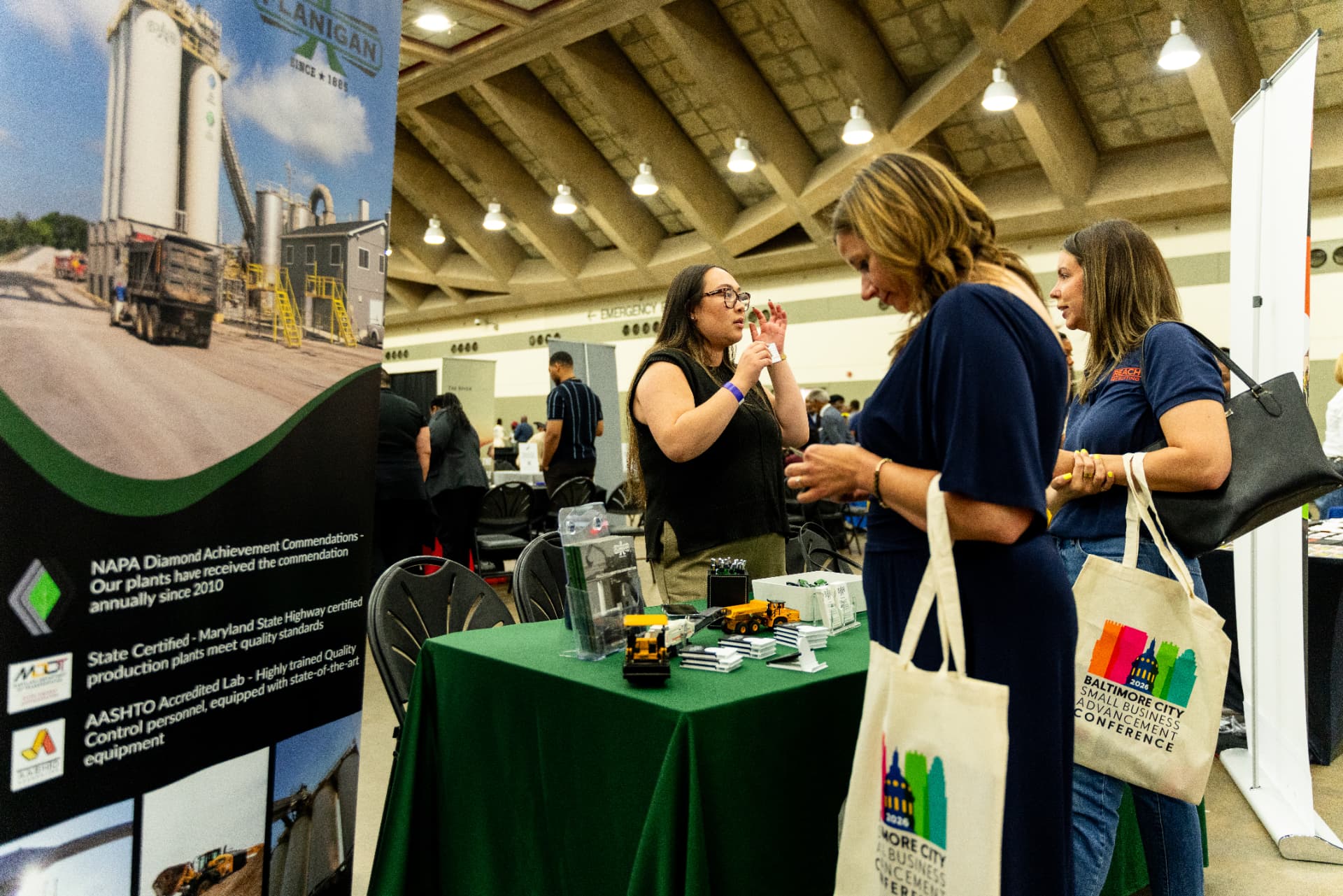
No one builds a business alone. Long before you have employees or investors, you have a network — the people who send you customers, answer your questions at 9 p.m., warn you about the mistake they made, and vouch for you when someone else is deciding whether to take a chance on you.
Networking is not collecting business cards. It is building genuine, two-way relationships over time. Done well, your network becomes your cheapest marketing channel, your informal board of advisors, and your early warning system for what is changing in your industry and in Baltimore.
Who belongs in your network?
A strong network is mixed. Aim for a handful of relationships in each of these groups rather than a hundred contacts in one.
- Mentors — Experienced business owners who have already solved the problems you are facing. A good mentor asks hard questions and tells you the truth.
- Peers — Founders at roughly your stage. They keep you accountable, share vendors and lessons, and remind you that you are not alone.
- Customers — The most valuable network you have. Talk to them constantly — they tell you what to build, price, and fix.
- Professional advisors — An accountant, an attorney, an insurance agent, and a banker who know small business in Maryland.
- Resource partners — Nonprofit and public organizations across Baltimore offering free coaching, classes, and capital readiness support.
- Champions — Neighbors, Main Street associations, and community leaders who talk about your business when you are not in the room.
How to build your network
- 01
Start with what you already have
List everyone you know who owns a business, works in your industry, or serves small businesses. Your existing network is bigger than you think.
- 02
Show up consistently
Pick two or three recurring events — a Main Street meeting, an industry meetup, a chamber breakfast — and attend them regularly instead of chasing every invite.
- 03
Lead with generosity
Ask how you can help before you ask for anything. Make introductions, share leads, and buy from other local businesses.
- 04
Ask better questions
Skip the elevator pitch. Ask what someone is working on, what is hard right now, and who else you should meet.
- 05
Follow up within 48 hours
A short, specific note referencing your conversation is what turns a business card into a relationship.
- 06
Build it online too
Keep your LinkedIn, Google Business Profile, and social accounts current so people can find and vouch for you between events.
Stay in the know
Want to know what is happening across the Baltimore business ecosystem? Sign up for the Baltimore BizSource newsletter for upcoming events, funding opportunities, workshops, and introductions to the people and organizations ready to help your business grow — delivered straight to your inbox.
Sign up for the newsletter