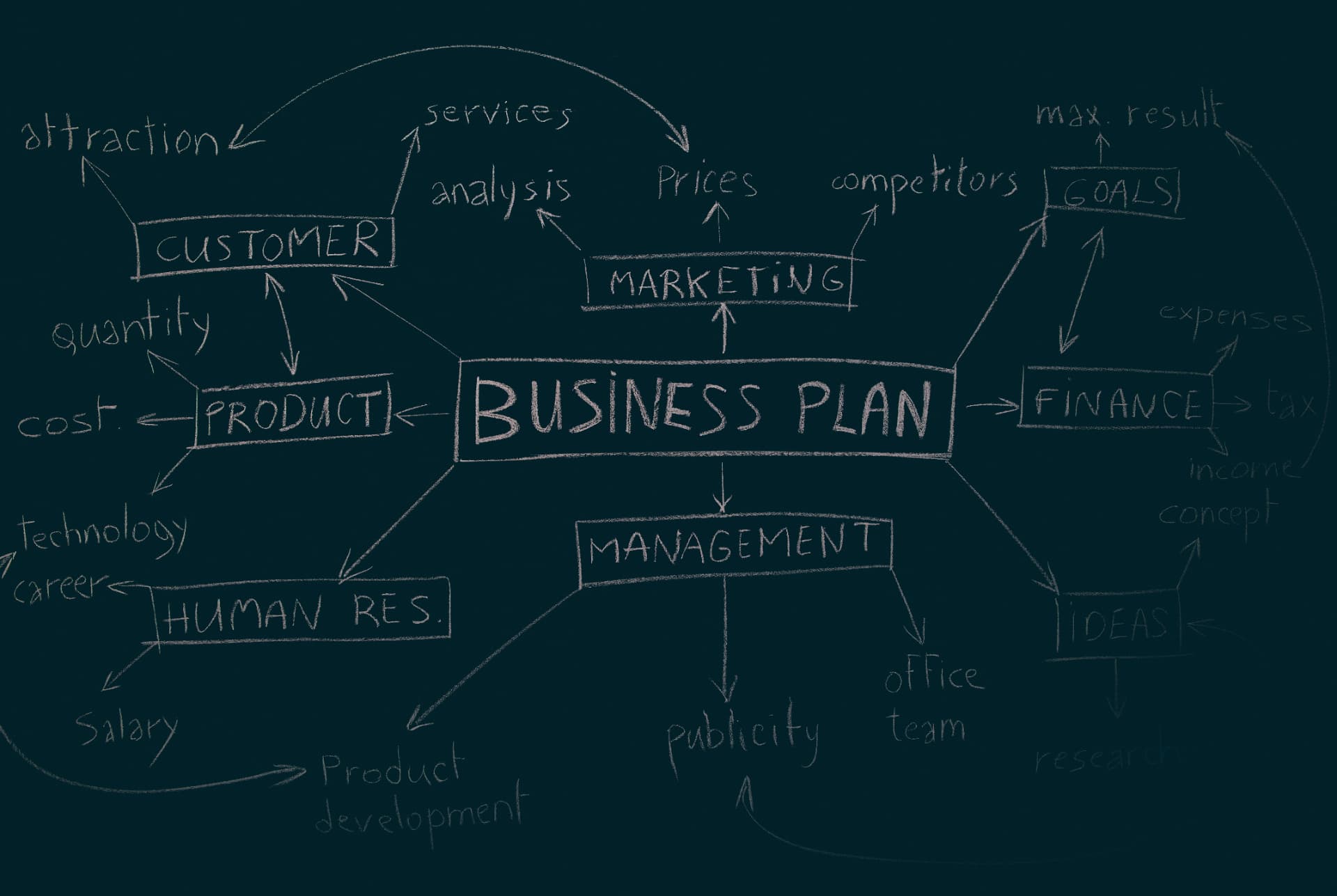
Starting a business involves risk — but it should be a calculated risk. A business plan is the document that explains what your business does, who its customers are, and how it plans to make money. Writing one lets you run the numbers and make informed decisions before you commit your savings.
It does not have to be fifty pages, and you do not have to write it in one sitting. Take it a section at a time and treat it as a living document you update as you learn, grow, or pivot.
Why write a business plan?
It helps you get money
A business plan clarifies your idea and gives banks, lenders, and investors the information they need to take a risk on you. Many loan programs require one before they will even start a conversation.
It forms your strategy
Writing the plan forces decisions about pricing, sales, and marketing — and gives you a foundation to build on years later when you are too busy to think it through from scratch.
It guides your growth
The plan pushes you to research your market and think about the things that are easy to skip: competition, operations, staffing, and cash flow.
It makes the risk calculated
Starting a business is always a risk. Research suggests founders with a plan are roughly two and a half times more likely to actually get into business.
What goes in a traditional business plan?
Traditional plans run several pages and are what most banks, the SBA, and private investors expect. Write for a reader who does not know you, your business, or your industry.
- 01
Executive Summary
A few paragraphs summarizing the whole plan. It may be the only section a busy lender reads, so write it last and make it excellent.
- 02
Business Description
What your business does, who it serves, and the products or services you offer with their prices. If a five-year-old would not understand it, simplify.
- 03
Market Analysis
Your industry, your customers, their pain points, what they spend today to solve the problem, and how big your addressable market really is.
- 04
Organization and Management
Your legal structure (LLC, sole proprietorship, corporation), ownership, who runs day-to-day operations, and each owner's role.
- 05
Service or Product Line
What you sell, how it gets designed or sourced, your pricing strategy, and what you plan to add next.
- 06
Marketing and Sales
How customers find you, how you convert them, and what it costs you to acquire each one.
- 07
Funding Request
If you are seeking capital: how much you need, what it will be used for, and the terms you are looking for.
- 08
Financial Projections
Startup costs, revenue and expense forecasts, break-even analysis, and cash flow — usually three to five years out.
- 09
Appendix
Supporting documents: resumes, permits, leases, letters of intent, market research, and product photos.
Feeling overwhelmed? Start lean.
A lean plan skips the finances at first and focuses on the core of your business model, so you can adapt as you talk to customers. Most lean plans follow the Business Model Canvas — nine blocks you can sketch on a whiteboard with sticky notes:
- Key Partnerships — Who do you work with, and what do they bring?
- Key Activities — What does your business actually do, sell, or offer?
- Key Resources — What tools, equipment, or know-how do you rely on?
- Value Proposition — What problem do you solve, and why is it worth paying for?
- Customer Relationships — How do you connect with and keep customers?
- Customer Segments — Who is your target market, and what do they need?
- Channels — How and where do you reach and sell to customers?
- Cost Structure — What does it cost to run the business and deliver?
- Revenue Streams — Where does the money come from, and can it grow?
Any written plan is better than none. Just remember that most lenders and investors will eventually want the full traditional version.
Get help writing your plan
BizChat
Need help with crafting a business plan? Try out BizChat, the AI powered business plan development tool designed to assit you in creating a solid business plan.
Maryland Small Business Development Center
Free one-on-one advising and business plan review, plus workshops on planning and financials.
SCORE Baltimore
Volunteer mentors who will read your plan, challenge your assumptions, and meet with you as long as you need.
SBA business plan templates and samples
Traditional and lean plan templates, plus real sample plans from the U.S. Small Business Administration.
Enoch Pratt Free Library
A library card unlocks industry reports and market databases you can cite directly in your market analysis.