Purpose
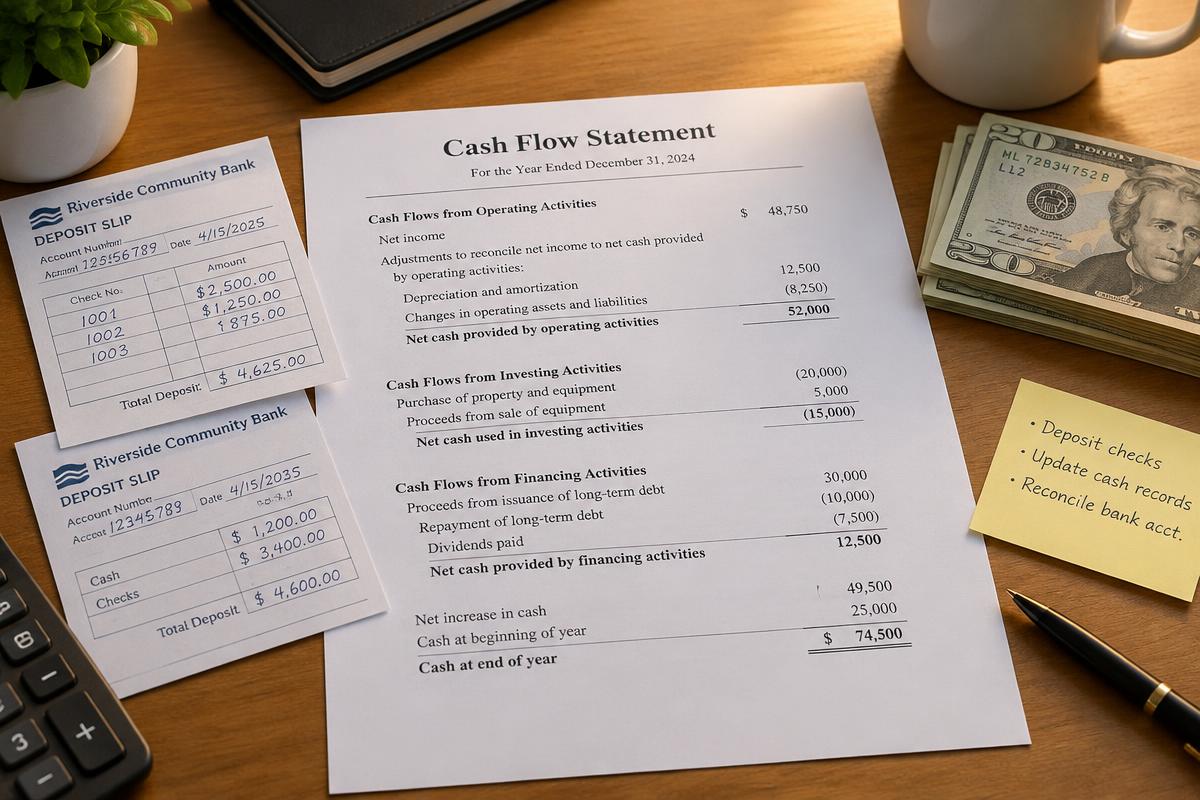
The purpose is to provide information about cash receipts and disbursements of an entity during a period. It shows changes over time rather than absolute dollar amounts at a point in time, and it uses information from the company's balance sheet and income statement.
- Helpful in understanding operations, liquidity and solvency, and the potential for positive cash flow.
- Reports cash, or cash and cash equivalents.
- Shows cash inflows and outflows from three activities: operating, investing, and financing.
The three activities
- Operating cash flows
- Cash flows related to the principal revenue-producing activities, from transactions related to the determination of net income. Inflows: cash receipts from sale of goods, fees from services, interest, and dividends. Outflows: cash payments to suppliers and employees, payments for taxes, and interest on debt.
- Investing cash flows
- Expenditures for resources that generate future income and cash flows. Inflows: cash receipts from the sale of property, plant and equipment; intangible assets; and other long-lived assets. Outflows: payments to acquire property, plant and equipment; intangible assets; equity and debt investments in other entities; cash advances; and loans made to other parties.
- Financing cash flows
- Cash flows involving issuance, settlement, or reacquisition of the entity's debt and equity. Inflows: proceeds from issuing common or preferred stock, borrowing on a loan, issuing notes and bonds. Outflows: repayments of loans, payment of cash dividends, payments to acquire treasury stock, and payments on a capital lease.
Direct method
The direct method presents major classes of gross operating cash receipts and payments and the net cash flow from operating activities. The following must be presented under operating activities: cash collected from customers; interest and dividends received; other operating cash receipts; cash paid to employees; cash paid to suppliers of goods and services; income tax paid; and other operating cash payments.
Formula
- Beginning Accounts Receivable + Sales – Ending Accounts Receivable = Cash Collected from Customers
- Beginning Accounts Payable + Purchases – Ending Accounts Payable = Cash Paid to Suppliers
- Beginning Interest Payable + Interest Expense – Ending Interest Payable = Interest Paid during Period
- Ending Prepaid Expenses + Current Period Expense – Beginning Prepaid Expenses = Expenses Paid during the Period
| Line | Amount |
|---|---|
| Cash collected from operating activities | $2,451,000 |
| Cash paid to employees and suppliers | (1,300,000) |
| Interest received | 30,000 |
| Interest paid | 6,000 |
| Income taxes paid | (270,000) |
| Net cash provided by operating activities | $917,000 |
| Proceeds from sale of machinery | $150,000 |
| Proceeds from sale of noncurrent investments | 135,000 |
| Payments for noncurrent investments | (200,000) |
| Payments for plant assets | (500,000) |
| Net cash used in investing activities | ($415,000) |
| Proceeds from current debt | $300,000 |
| Proceeds from issuance of stock | 200,000 |
| Dividends paid | (250,000) |
| Net cash provided by financing activities | $250,000 |
| Net increase in cash | 752,000 |
| Beginning balance | 500,000 |
| Ending balance | $1,252,000 |
Indirect method
The operating section reports net income and then converts it from the accrual basis to the cash basis using the changes in balances of current asset and current liability accounts — accounts receivable, inventory, supplies, prepaid insurance, other current assets, notes payable, accounts payable, wages payable, payroll taxes payable, interest payable, income taxes payable, unearned revenues, and other current liabilities. Operating activities also carry adjustments for depreciation expense and for gains and losses on the sale of long-term assets.
The investing section reports changes in the balances of long-term asset accounts: long-term investments, land, buildings, equipment, furniture and fixtures, and vehicles. The financing section reports changes in long-term liability and stockholders' equity accounts, such as notes payable due after one year, bonds payable, deferred income taxes, preferred and common stock, paid-in capital in excess of par, paid-in capital from treasury stock, retained earnings, and treasury stock.
| Line | Detail | Total |
|---|---|---|
| Net income | $700,000 | |
| Depreciation | 200,000 | |
| Inventory | (90,000) | |
| Accounts payable | 105,000 | |
| Accounts receivable (net) | 45,000 | |
| Prepaid expenses | 6,000 | |
| Gain on sale of investments | (40,000) | |
| Interest payable | 6,000 | |
| Income tax payable | (15,000) | |
| Net cash provided by operating activities | $917,000 | |
| Net cash used in investing activities | ($415,000) | |
| Net cash provided by financing activities | $250,000 | |
| Net increase in cash | 752,000 | |
| Beginning balance | 500,000 | |
| Ending balance | $1,252,000 |
Preparation and presentation
- 1Calculate the change in cash and cash equivalents for the period — this change is what is reconciled on the statement of cash flows.
- 2Determine the cash flows from operating activities by either the direct or the indirect method.
- 3Analyze the changes in non-operating accounts to determine the impact on cash flow; those cash flows are presented in the investing and financing sections.
- Net cash flow from operating activities (direct or indirect method)
- Net cash flow from investing activities
- Net cash flow from financing activities
- Net increase (or decrease) in cash and cash equivalents
- Cash and cash equivalents at beginning of year
- Cash and cash equivalents at end of year
Supplemental information
- Discloses the amount of interest and income taxes paid.
- Reports significant exchanges not involving cash, such as the exchange of company stock for company bonds.
Guide: Financial Statements
NEXT · PART SIX: Equity, Comprehensive Income and SEC Reporting
Continue the guide